AHPA Briefs
October 30, 2026
Treasury Proposes New Premium Tax Credit Rules with Implications for Health Coverage
The U.S. Department of the Treasury and Internal Revenue Service (IRS) have proposed new regulations governing eligibility for Affordable Care Act (ACA) premium tax credits, which help eligible individuals and families afford health insurance through the ACA Marketplaces. Published October 15th, the proposal largely implements provisions of the One Big Beautiful Bill Act (H.R. 1), enacted in July 2025, while establishing additional requirements for eligibility verification, subsidy calculations and reporting. Although the changes would not directly alter hospital reimbursement policies, they could have implications for patients’ ability to maintain affordable insurance coverage, increasing uncompensated care.
What’s Changing?
Under previous regulations, certain lawfully present immigrants who were ineligible for Medicaid could qualify for premium tax credits even with incomes below 100% of the federal poverty level. H.R. 1 eliminated this exception beginning in 2026 and further restricted eligibility beginning in 2027 to lawful permanent residents, Cuban and Haitian entrants and certain individuals residing in the United States under Compacts of Free Association. The proposed rule would incorporate these restrictions into existing regulations and adjust how subsidies are calculated for households containing both eligible and ineligible individuals.
The proposal also addresses the relationship between Medicaid eligibility and Marketplace subsidies. Beginning in 2027, Medicaid adults who would otherwise qualify for Medicaid but fail to satisfy the new community-engagement requirements would generally remain ineligible for Marketplace premium tax credits. However, individuals who subsequently become ineligible for Medicaid for another reason, like increased income, could qualify for premium tax credits if they meet other eligibility requirements.
The proposed rule would also update existing regulations to reflect changes that took effect January 1, 2026, under H.R. 1. These include restrictions on premium tax credits for individuals enrolling solely through income-based special enrollment periods and the elimination of income-based caps on repayment of excess advance premium tax credits.
Previously, lower-income taxpayers generally faced limits on how much excess financial assistance they could be required to repay. Under the revised law, individuals must repay the full number of advance credits exceeding their final eligibility, which could increase financial risks for households whose income or circumstances change during the year.
Beginning in 2028, the proposal would also implement new pre-enrollment verification requirements for Marketplace subsidies, including confirmation of income, family size, immigration or citizenship status, residence and eligibility for other coverage. The Treasury proposes limited exceptions for certain family changes, including births, adoptions, marriages and deaths, to avoid unnecessary disruptions in financial assistance. These requirements could introduce additional administrative steps for individuals seeking subsidized coverage, although the proposed exceptions will preserve access during qualifying life events.
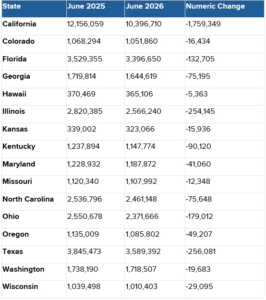
Individuals who no longer qualify for premium tax credits may still purchase unsubsidized Marketplace coverage, but the loss of financial assistance could make that coverage less affordable. The Treasury estimates that approximately 15.6 million Marketplace enrollees fall within the scope of the regulations, including 13.5 million potentially eligible for premium tax credits. Below is a snapshot of how enrollment in the ACA Marketplaces have changed since last year among AHPA states.
Medicaid Enrollment Change: June 2025 to June 2026